
Time travelling through the art of Cosgrove Hall costume Part 1
A wonderful guest blog by Rebecca, a self taught costume designer, fabricator, prop maker and set dresser who's niche is in historically accurate costumes. One of her passions is the history of vintage animations and cartoons, with a costumers viewpoint she brings you her insight into the costumes and designs of beloved Cosgrove Hall characters in a two part blog.
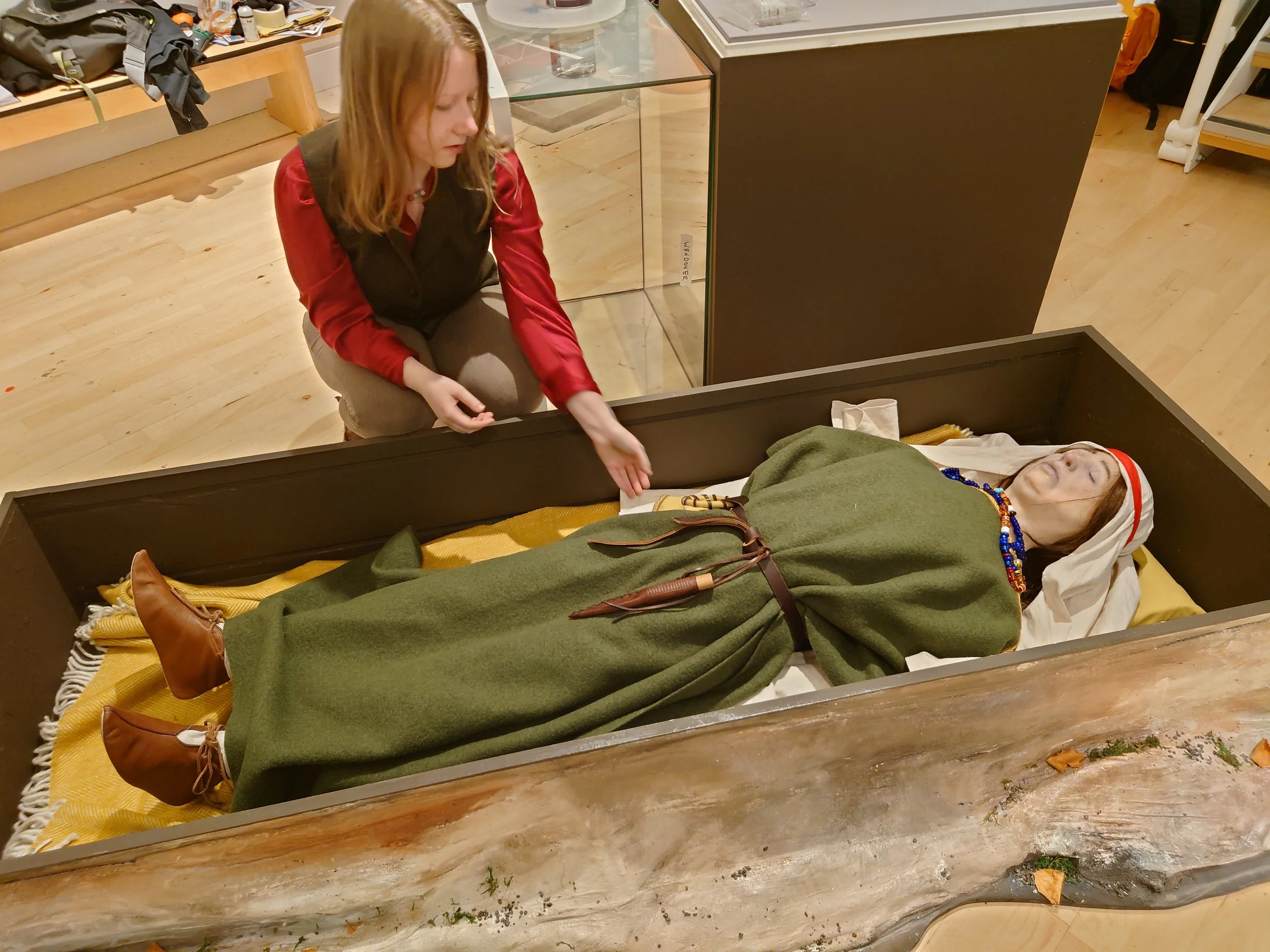
The author, Rebecca with one of four costumes she made from scratch for the saxon burials she worked on from Sept 2025 - March 2026.
Costuming and the art direction of a production be it an animated film, theatre play or live action blockbuster plays a significant part in developing various areas of a story: creating character wardrobes helps an actor to build their character’s personality through clothes, whereas art direction builds the overall look and feel of a production, e.g colour palette and style that builds imagery for an audience to remember after seeing a play, film or television show for the first time.
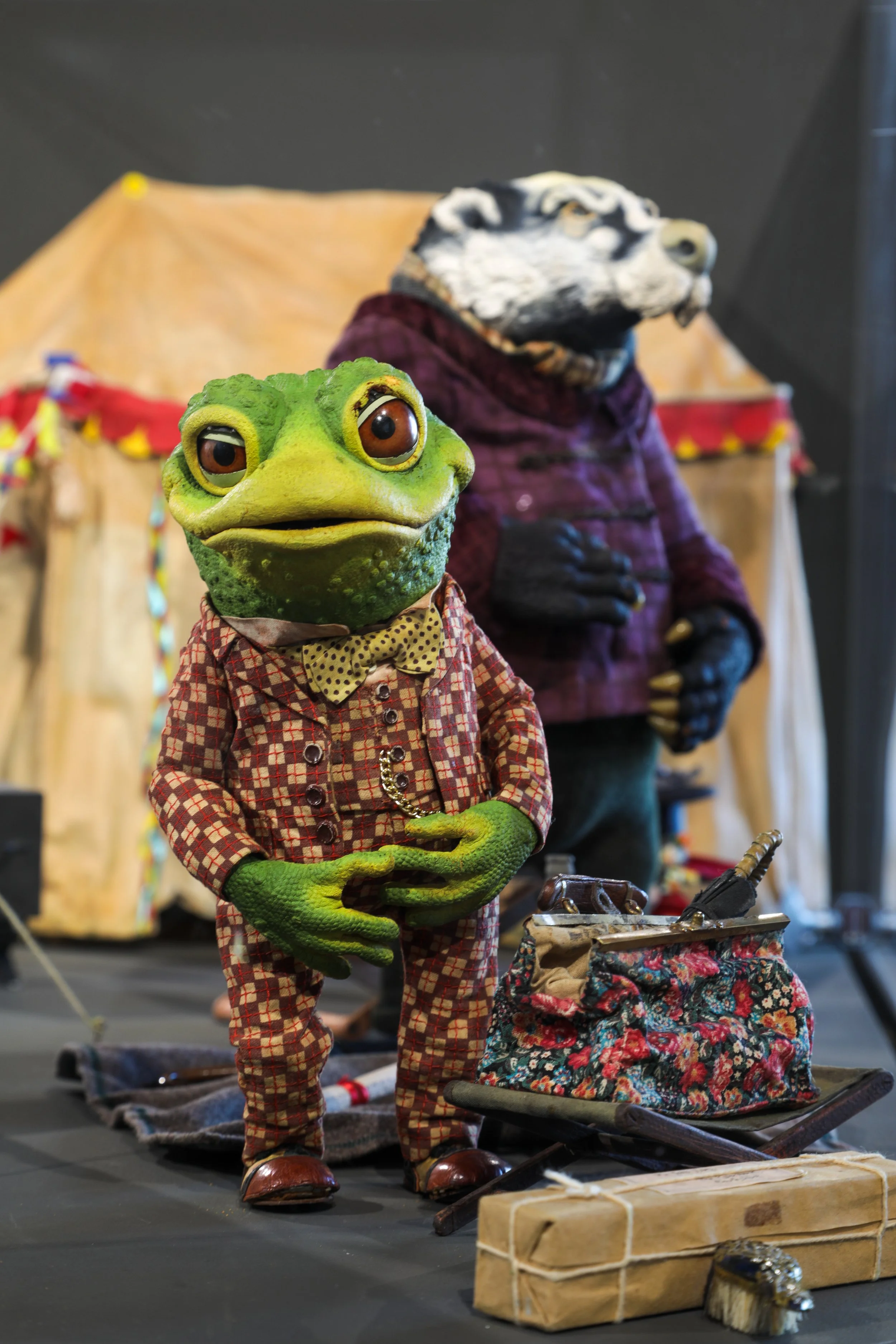
Toad and Badger from Cosgrove Hall’s The Wind in the Willows from our past exhibition Scene on Screen (2024). Image credit: Jason Locke photography
Let's explore the important part these behind the scenes roles have played in producing a sense of time travel and fantasy in Cosgrove Hall productions throughout the years..
Imagine it is the 1980s, 1984 to be exact, now wind back the clock in your imagination even further into the past to an Edwardian river bank where you’ll find the Wind in the Willows. Adapted from the 1908 book by Kenneth Grahame the series (airing between 84”-88”) follows the adventures of Ratty, Badger, Mole and Toad and their adventures in rural Edwardian England.
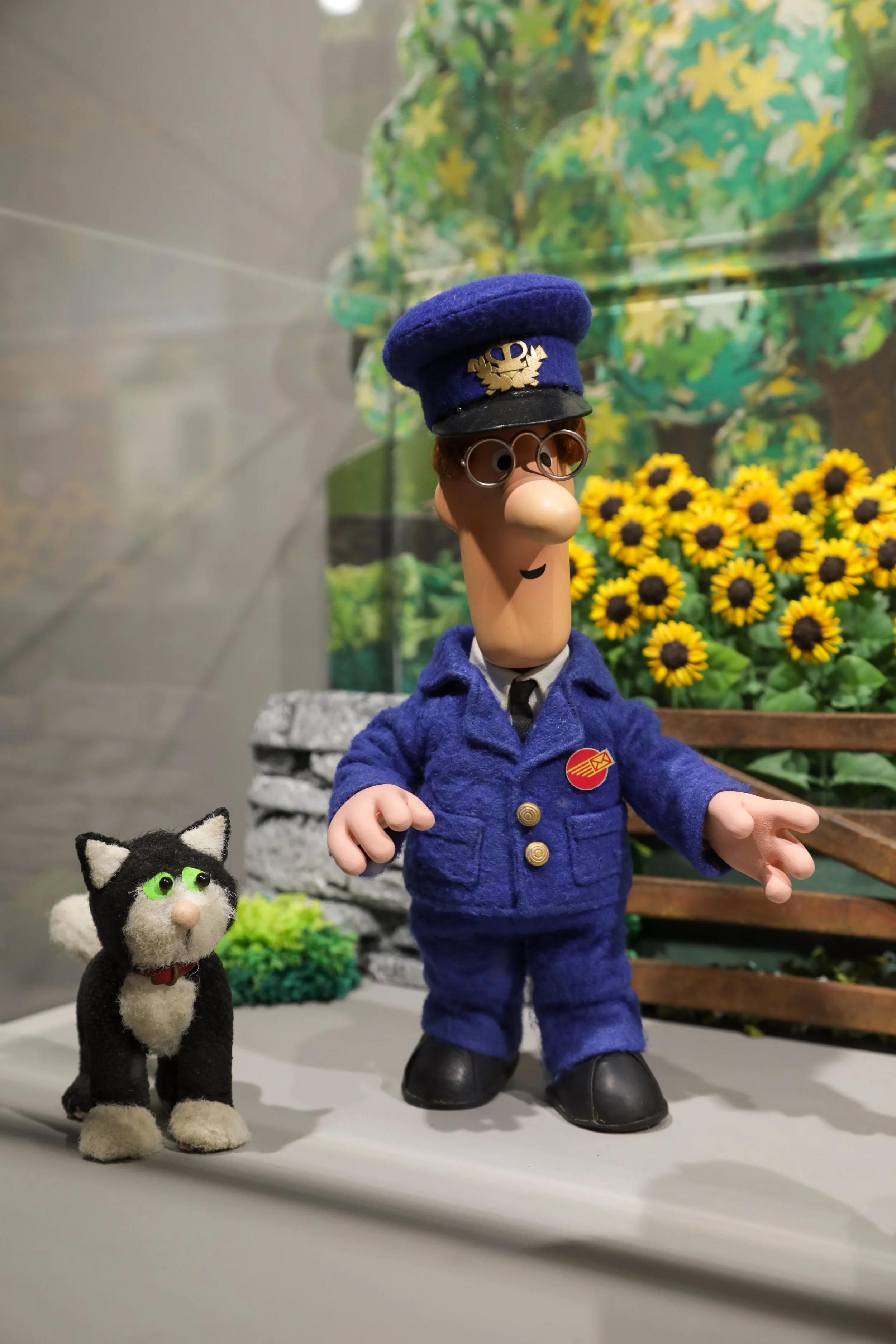
Postman Pat, Cosgrove Hall Films & Mackinnon & Saunders. Image Credit: Jason Locke photography
Choosing each detail from a silk bowtie, spats, wire spectacles, pocket watches, pull over jumpers, smoking caps, tweed sporting coats and high hemmed waistcoats all serve to give us the audience, an idea of a characters personality, ways of thinking and lifestyle. Every true to period piece from costume designer Nigel Cornford, costume assistant Helen Plaumer and concepts from illustrator Beverly Bush works together with a voice actors performance, animation, background design and special effects to create a world with a period and location that we can truly believe exists somewhere in the 1900s.
One character who particularly embodies the bespoke and opulent side of Edwardian fashion (1901- 1910) is Mr Toad, with his tailored three piece suits, myriad of vibrant silk neckwear and no end of bespoke garments, Toad truly is the height of Edwardian fashion..
We’ll stay in the countryside for a while with a different character this time. Draw your imagination away from the river bank and into a village some miles away, with winding roads and sheep filled fields, where the only way to stay in touch is a letter in via the post office, the village sign reads ‘Greendale’ and here comes Pat on his rounds…
Set in the mid 20th century amongst a rural community from the mind and illustrations of John Cunliffe, Cosgrove Hall Films took over the production of Pat for a short time in the early 2000s working with the designs of the original puppets by Ivor wood. In the cast of characters you can spot clothes straight from the 1950s: to start is Pat’s blue postman's outfit with brown leather delivery bag, you will also find hounds tooth flat caps, gingham pattern shirts, fair isle and cable knit jumpers, floral print dresses, farming dungarees and much more.
A Postman's outfit throughout history has gone through many changes and part of that lengthy tale is the blue coat and how it was only introduced at the start of the 20th century. You can find evidence of this in photos of postmen in America, Austria and France from the start of 20th century and beyond. Making Postman Pat a globally recognisable character.
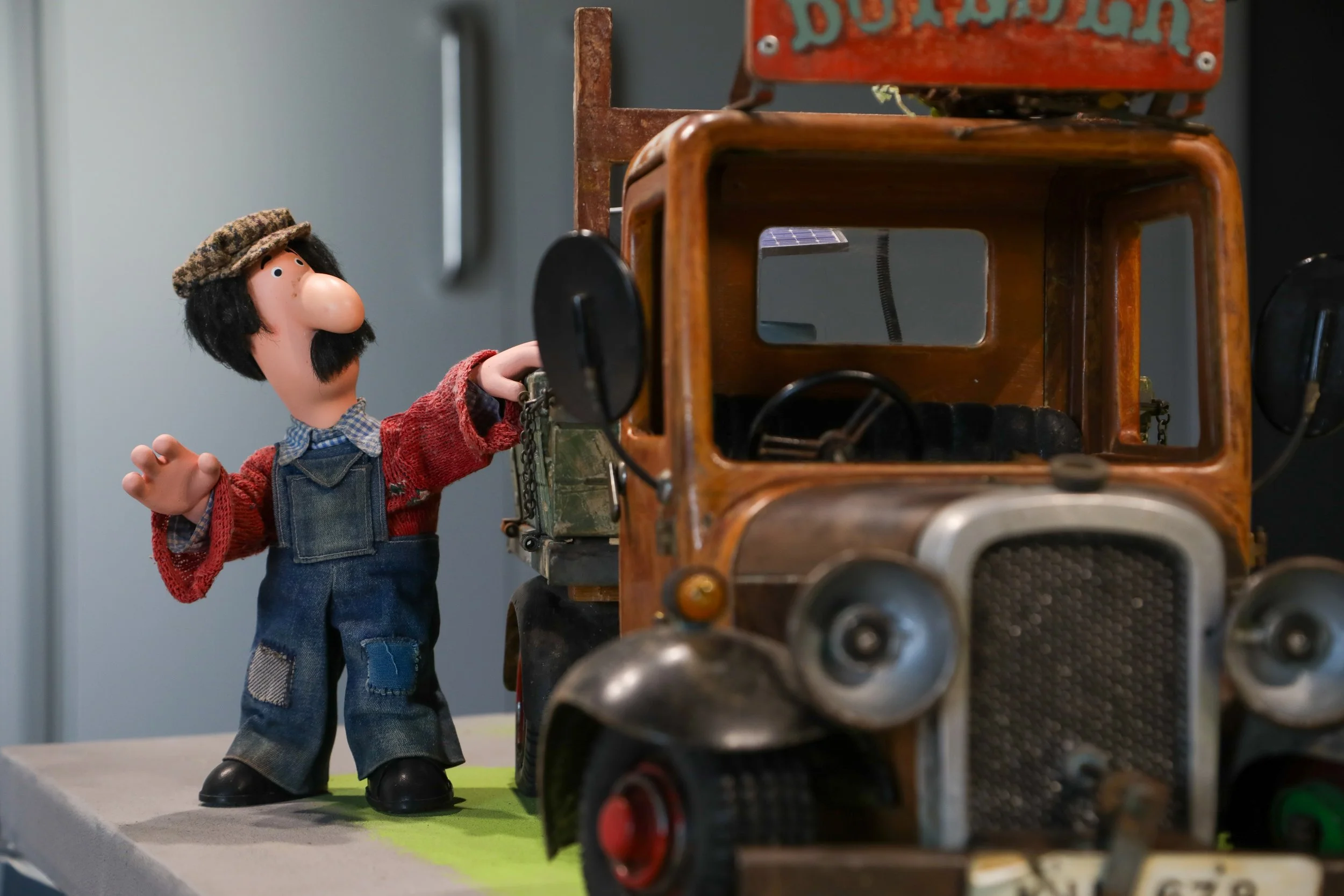
Ted Glen, Postman Pat, Cosgrove Hall Films and Mackinnon & Saunders. Image credit: Jason Locke Photography
Let's take a walk beyond the village of Greendale and go through the lush green woodlands surrounding the village. In the centre of these woods is an ancient Oak tree with a story, in its roots are signs of life and something that looks like a fairy door…
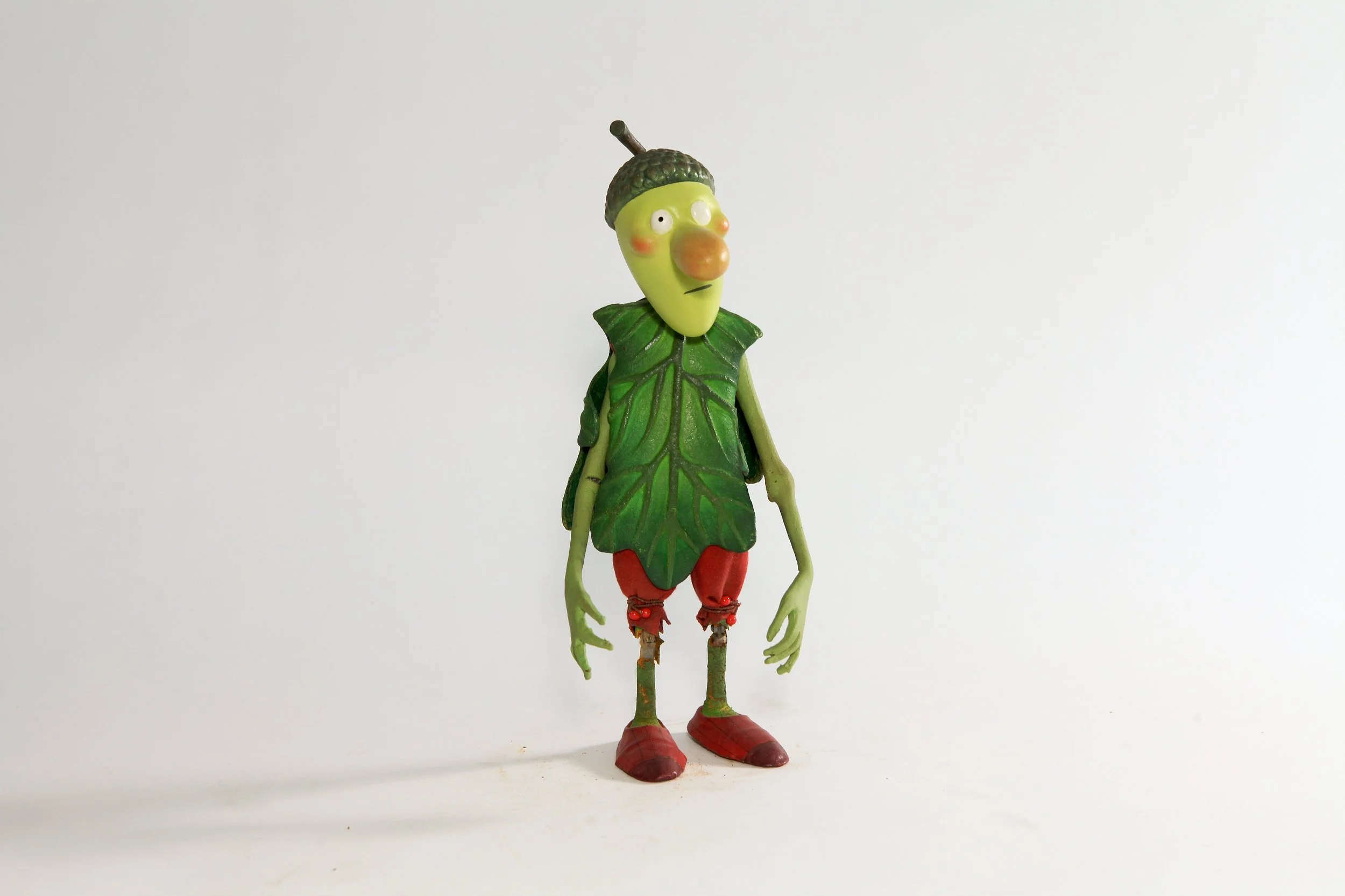
Oakie Doke, Cosgrove Hall Films. Image credit: Jason Locke photography
Oakie Doke and the adventures of his animal friends aired between 1995-1997 with Bridget Appleby creating its original concepts and designs, accompanied by the props of Clare Elliot and Geraldine Corrigan Oakie’s secret miniature world is reminiscent of the ones found in classic folk tales from England, Ireland, Wales and Scotland. Specifically he puts me in mind of one being known as the green-man whose presence is only found in the woods, a bringer of wisdom, guardian of the forest and ‘help’ to those who respect nature and its offerings.
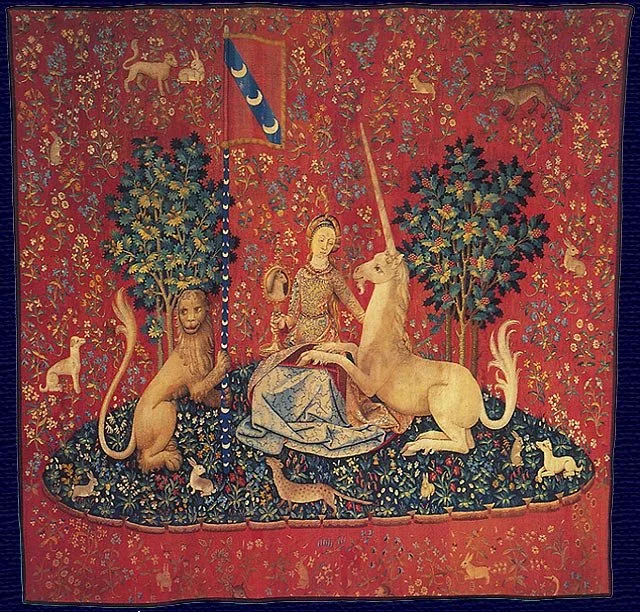
The Lady and the Unicorn (c. 1500). Musée de Cluny, Paris. Photo via Wikimedia Commons (Public Domain).
Oak trees are a symbol of majesty and endurance, their symbolism can be found in everything from antique jewellery and tiaras to costumes, textile art and modern design. Most notably an oak tree can be found in the famous tapestry The Lady and The Unicorn, in the works of William Morris, in the centre of George Stubbs’ Mares and Foals under an Oak tree, appear in set designs and couture collections for names such as Chanel and Dior. With oaks able to live to 400 years old in the wild it is no wonder this species of tree has continued to bring inspiration to artists looking to create something ageless and mythical..
Thanks for reading and join us soon for part two of this blog!
Rebecca